
Split Air Conditioner Installation Cost: What You’ll Pay & How to Save in Johannesburg, Roodepoort, Sandton, Randburg, Eastrand, Midrand, Centurion & Pretoria
Curious how much the Split Air Conditioner Installation Cost for an effective climate solution will really set you back in Jo’burg?
We explore current pricing bands and explain why quotes vary so widely across the city. Typical all‑in figures range from roughly R10,000 to R54,000+ depending on unit size, system type and job complexity.
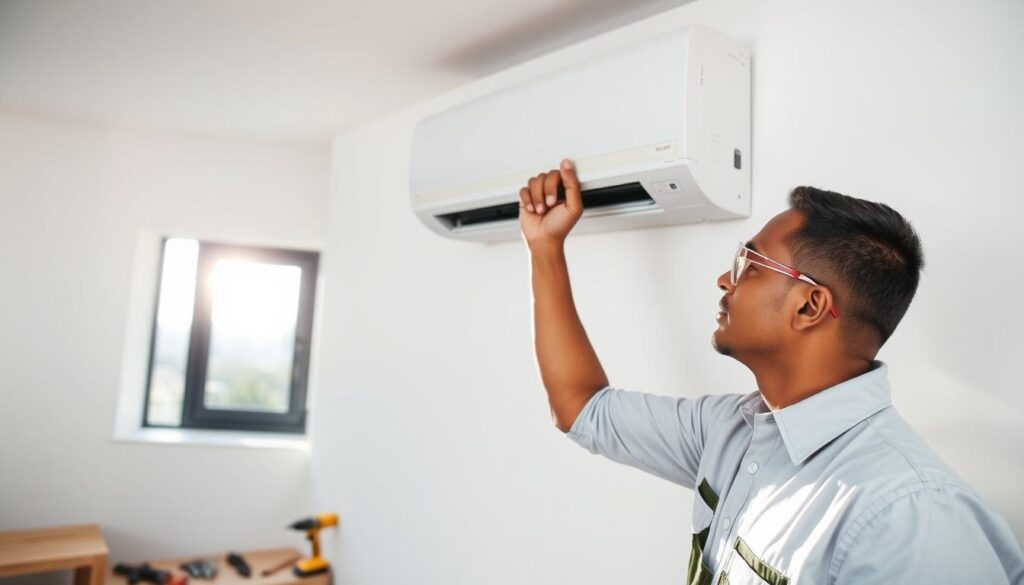
We outline the main drivers of final bills: access to the property, wall build and storeys, pipe runs and the distance between indoor and outdoor components. These factors change both labour and material needs.
As a practical buyer’s guide, we show how we compare quotes and what a proper scope should include. We will use Johannesburg examples and include tables and checklists so you can budget with confidence.
Early choices matter. We signpost the key decisions — system type, size, placement and electrical readiness — because they shape both the long‑term comfort and the eventual price you pay – Contact Us
What we mean by split air conditioning and what’s included in an installation – Split Air Conditioner Installation Cost
To make quotes clearer, we begin with a plain‑English rundown of the parts and the work involved.
Basic layout: a wall‑mounted indoor head pairs with an outdoor condenser/compressor via refrigerant piping. This layout affects where we place the unit, how much noise you hear outside, and which walls or brackets we use on Johannesburg properties.
Typical work we include in an installation: secure indoor and outdoor mounting, pipe and cable runs, vacuum and pressure testing, electrical connection and commissioning. Optional items often add time and price.
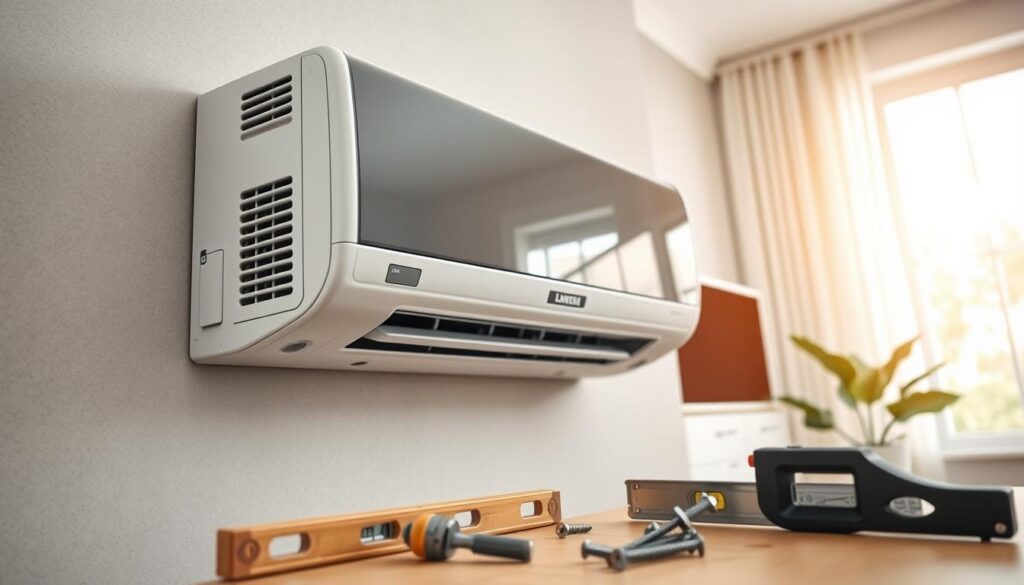
What’s usually included vs nice‑to‑haves
| Item | Usually included | Nice‑to‑have / Extra |
|---|---|---|
| Mounting brackets | Yes | Vibration isolators |
| Pipework & insulation | Up to standard length | Extra‑long runs / concealed trunking |
| Vacuum & charge | Yes (commissioning) | Refrigerant top‑up later |
| Coring or structural work | Basic hole | Thick brick coring / plaster repairs |
Timelines and pricing notes
Most single‑unit installs take about 2–6 hours. Complex sites or centralised systems can need 10+ hours. Back‑to‑back installs are quicker; multi‑storey or long runs slow us down.
We recommend clarity on whether installers price per job or per hour. A clear scope protects both client and team and avoids surprises on the final quote.
Split Air Conditioner Installation Cost in Johannesburg: current price ranges
We map realistic price bands for full packages, labour-only work and hourly rates so you can compare quotes fast.
All-in pricing for a unit plus fit typically spans roughly R10,000–R54,000+. Most quoted packages fall between R18,500 and R40,000 depending on brand tier, inverter efficiency, BTU capacity, mounting and access.
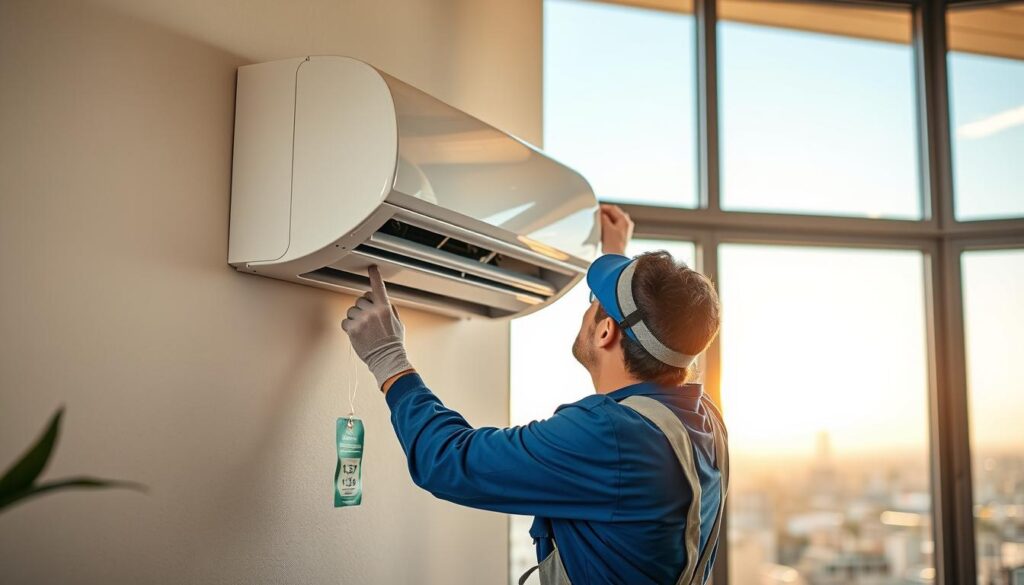
Labour-only guidance
Labour-only jobs generally run R1,900–R3,100 (average ~R2,400). Back-to-back simple installs can be nearer R1,500 while more complex installs start around R2,000. Labour should cover mounting, standard pipe and cable allowances, vacuuming and commissioning.
Hourly rates and scenarios
Installers charge hourly when sites are uncertain. Domestic rates are about R600–R1,100/hr; commercial works R800–R1,400/hr. We advise asking for a cap or not-to-exceed limit to control spend.
“Clear scopes and photos cut surprises. A good brief gets your first quote much closer to the final invoice.”
| Model | Typical scope | Who supplies materials | When cost‑effective |
|---|---|---|---|
| Unit + install | Full supply, mount, pipes, vacuum, commissioning | Installer or retailer | When you want warranty & single point of responsibility |
| Labour-only | Fit only; client supplies unit & parts | Client | When you already bought a unit or want a cheaper quote |
| Scenario | Indicative price | Why | |
| Back-to-back | ~R1,500–R2,400 | Easy access, short pipe run | |
| Complex site | R2,000–R5,000+ | Long runs, extra coring, difficult access |
To get an accurate quote, tell us room size, preferred location, wall type, storeys and photos. That cuts revisions and gives realistic expectations of final price.
Johannesburg pricing by city and suburb: what can move your final quote – Split Air Conditioner Installation Cost
Local logistics often explain price gaps more clearly than model specs.
Quote differences arise from travel time, parking limits, security and the physical access to the work area. A tight driveway or long walk from the van adds labour and handling time. Body corporate rules in apartments can add bookings and permits. These practicalities show up in our final figures.
Travel, access and property type: why suburbs can price differently
Inner-city locations may charge more for parking permits and short working windows. Suburbs with quiet streets may need longer drives between jobs.
Double-storey houses often require scaffold or a safe ladder setup. Offices can demand restricted hours and extra permits. These needs change the scope of the installation and the service time we quote.

| Area factor | Typical impact | Notes for your quote |
|---|---|---|
| Parking availability | Adds 30–90 mins work time if distant | Tell us permit needs or paid parking |
| Access distance | Long runs raise labour and pipe length | Note stairs, gates, or long corridors |
| Wall type | Brick/concrete may need coring; drywall easier | State wall material and finish |
| Storeys | Scaffold or hoist may be required | Confirm number of floors and outdoor mounting spot |
How we compare quotes fairly: we match the same scope and inclusions across providers before deciding. The cheapest number can exclude essentials and later become an extra.
| Photos to send | Why it helps | Quick tip |
|---|---|---|
| Wall where unit will sit | Shows material and fixings | Include a close and a wide shot |
| Outdoor space for condenser | Reveals mounting options and obstructions | Show clearances and nearby neighbours |
| Path from parking to work area | Clarifies handling and time | Walk the route and snap gates or stairs |
“A clear brief and photos shorten visits and make our get quotes closer to the final invoice.”
What drives aircon installation cost the most – Split Air Conditioner Installation Cost
Little details — long pipe runs, high ceilings and large windows — often move a quote more than the unit make or model.

System type choices and how costs scale
We compare three main options: single-zone wall units, multi-zone systems and ducted central systems. Each extra zone or run adds labour, piping and controls.
Room size, BTU and why correct sizing matters
Choosing the right size avoids wasted spend. Oversized units cost more up front and short-cycle. Undersized units run harder, raise energy bills and shorten life.
Square metres to BTU (common guide)
Small lounge (12–18m²): ~9,000–12,000 BTU. Medium lounge (18–30m²): ~12,000–18,000 BTU. Large open plan (30–45m²): 18,000–24,000 BTU.
Hidden heat factors and local notes
High ceilings and west-facing windows raise heat gain. Windows can account for up to ~40% of heat transfer in local homes.
Complexity, electrical needs and extra trades
Long pipe runs, difficult access or structural changes increase time and materials. Dedicated circuits, isolators or panel upgrades add both price and scheduling.
We often call electricians, plumbers or duct specialists for larger jobs to ensure safe, warrantied work.
| Key factor | Typical impact | Why it matters |
|---|---|---|
| System type | High | More zones = more parts & labour |
| Size/BTU | High | Right size saves energy & wear |
| Pipe/cable length | Medium | Long runs raise materials & time |
| Access / scaffolding | High | Hard access needs special kit |
| Electrical upgrades | Medium | New circuits and breakers add cost |
“Clear photos and room details give us a much truer quote before site visits.”
How to choose the right split aircon size and option before you buy – Split Air Conditioner Installation Cost
We start by matching room dimensions to practical BTU ranges so you buy the right cooling capacity for your space.
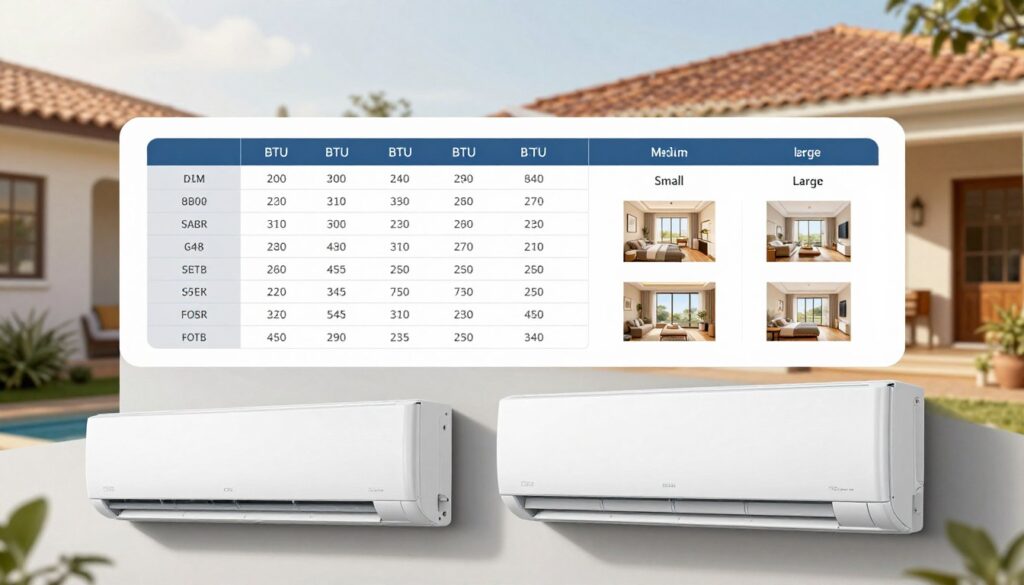
Split aircon price guide by room size and BTU (indicative ranges)
Below we show typical installed price bands tied to room size and recommended BTU. Use these as a planning guide before you request a formal quote.
| Room size (m²) | Recommended BTU | Indicative installed price |
|---|---|---|
| 0–25 | ~9,000 BTU | R18,000–R30,000 |
| 25–40 | ~12,000 BTU | R20,000–R33,000 |
| 40–50 | ~18,000 BTU | R25,000–R40,000 |
| 50–60 | ~20,000 BTU | R27,000–R50,000 |
Why oversizing and undersizing costs you more over time
Oversizing raises the up-front investment and often causes short-cycling. Short cycles waste energy and reduce the lifespan of the unit.
Undersizing forces the system to run constantly. That increases running energy use, raises bills and can leave rooms uncomfortable.
“Right sizing gives the best balance of comfort, running costs and longevity.”
Energy efficiency as an investment: comfort, heating and long-term costs
Choosing inverter models and higher efficiency ratings is an investment that lowers ongoing energy bills and improves heating performance in cooler months.
| Feature | Value | How it affects price & running |
|---|---|---|
| Inverter | High | Higher purchase price, lower energy use and smoother cooling |
| Wi‑Fi control | Medium | Small extra on price; better scheduling can cut use |
| Low‑noise mode | Medium | Often in premium units; adds comfort in bedrooms |
Checklist before you buy:
- Confirm room usage and square metres.
- Note window exposure and likely heat gain.
- Measure ceiling height and placement limits.
- Check electrical readiness and breaker capacity.
- Decide preferred features (inverter, Wi‑Fi, quiet mode).
Split Air Conditioner Installation Cost: Conclusion
Here we summarise practical next steps to get reliable quotations and avoid surprises.
We recommend you get quotes from at least three installers so you can compare like-for-like scopes. Send clear photos, room measurements and describe wall type and outdoor access to speed replies.
Key takeaways: typical installation ranges vary by system type, sizing, pipe runs, access and whether extra trades or electrical work are needed. Ask providers what may trigger extras and whether installers charge hourly or offer a fixed price.
Quick decision guide: if your house has easy access, expect low complexity and request a fixed-price quote; if access is difficult, ask for itemised labour and materials.
When you’re ready, get quotes, compare inclusions and pick the service that balances price, warranty and scheduling so your home stays comfortable.