
Why Holiday Home Off-Season Painting Prices Make Now the Best Time to Paint in Johannesburg, Roodepoort, Sandton, Randburg, Eastrand, Midrand, Centurion & Pretoria
With holiday home off-season painting prices in mind, who pays what when you schedule work between bookings? We ask this because owners need clear, current guidance to budget a reliable coat or full refurb for lettings across Johannesburg and beyond.
We write as a team that measures, inspects and quotes fairly. Our notes cover scope, prep, access and product quality so you can compare like‑for‑like quotes.
Typical South African rates range from about R60 to R200+ per square metre, depending on surface condition and whether the job is interior, exterior or both. These figures help set realistic expectations rather than sell a single number.
Why schedule between guests? Fewer interruptions, quicker turnaround and often better value for a multi‑property manager. We will show rate bands, suburb comparisons and add‑ons in tables so you can estimate totals before a site visit – Contact Us
Holiday home off-season painting prices in Johannesburg: what you can expect
We present clear per square metre ranges so you can gauge likely costs fast. Below we show typical bands, what they include and what pushes quotes higher.

Typical ranges
Local benchmarks: interior work often starts at roughly R60 per square metre, with common range r60 to R200+ where labour, basic materials and prep are covered.
Why off-season bookings can deliver better value
We find owners who book between stays get more flexible dates and fewer guest interruptions. That lets us schedule thorough washing, drying and curing without rush, which keeps painting costs sensible.
When exterior work hits premium rates
Exterior painting can reach around ±R250 per m² for complex access, high‑durability coatings and extra repairs. Costs vary by height, scaffolding need and substrate condition.
| Band | Per square | Per square metre | What’s included |
|---|---|---|---|
| Budget | R60–R90 | R60–R90 | Basic prep, standard paint, labour |
| Mid‑range | R91–R150 | R91–R150 | Repairs, better paint, minor access |
| Premium | R151–R250+ | R151–R250+ | High‑spec coatings, scaffolding, colour changes |
Per square metre vs per hour: choosing the right pricing model for your paint job – Holiday Home Off-Season Painting Prices
Deciding between area-based or hourly billing helps avoid surprises on site. We outline when each model is fair and how we check quotes against real time on the job.

Per square metre explained for lettings
Per square metre works well for full repaints where walls and ceilings are measurable. It gives fast comparisons and a clear scope for materials and coats.
When we charge per hour
We use per hour rates for small or uncertain tasks. Professionals typically bill between R450–R900 per hour, so short snag lists, touch-ups or unpredictable repairs often suit hourly billing.
Estimating productivity and fairness
We estimate about 4–8 m² per hour depending on prep and access. Factors influence this rate—surface repairs, sanding, masking and trim detail are the usual drivers.
| Hourly rate | Estimated m²/hr | Typical equivalent per m² |
|---|---|---|
| R450 per hour | 8 m² | ≈ R56/m² |
| R675 per hour | 6 m² | ≈ R113/m² |
| R900 per hour | 4 m² | ≈ R225/m² |
To get a fair quote we estimate area, list prep tasks and define coats, then sanity-check time-on-site. We recommend per hour for touch-ups and snag lists, and per square metre for full repaints and planned maintenance to keep labour costs and painting costs transparent.
Johannesburg and suburb price differences: where costs vary and why – Holiday Home Off-Season Painting Prices
Understanding where and why rates change across the metro helps with realistic budgeting. We set clear per‑m² expectations for common suburbs and explain the practical reasons quotes differ.
Johannesburg vs Sandton vs Midrand
| Area | Low (R/m²) | Mid (R/m²) | High (R/m²) |
|---|---|---|---|
| Johannesburg | R60 | R90 | R200+ |
| Sandton | R100 | R150 | R200+ |
| Midrand | R90 | R120 | R150 |
Randburg, Roodepoort and the East Rand
| Area | Low | Mid | High |
|---|---|---|---|
| Randburg | R70 | R100 | R140 |
| Roodepoort | R65 | R95 | R130 |
| East Rand | R60 | R90 | R120 |
Pretoria and Centurion comparisons
| Area | Typical range (R/m²) | Notes |
|---|---|---|
| Pretoria | R80–R120 | Good for batch scheduling across properties |
| Centurion | R80–R130 | Similar benchmarks; travel time matters for multiple sites |
Quote influencers we see daily include long carry distances from parking, strict estate sign‑in rules, lift access versus stairs and whether the property is occupied.
“Small logistic hurdles often push regional price bands higher than you expect.”

Practical tip: standardising finishes and scheduling neighbouring properties together reduces travel time and helps lower overall painting services spend without cutting prep or quality.
Interior vs exterior costs (and how we prioritise) – Holiday Home Off-Season Painting Prices
When owners decide which areas to tackle first, we weigh guest comfort against long‑term protection.
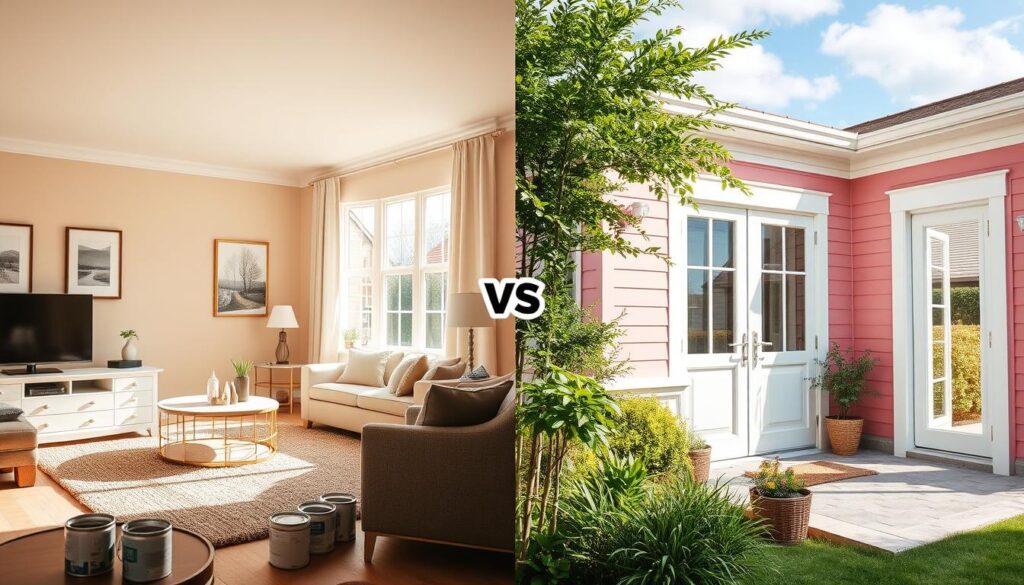
Interior work usually gives immediate guest value. In Johannesburg we benchmark interior from about R60 per square metre, which often includes two coats, basic prep and minor repairs.
By contrast, exterior painting needs weather‑proofing and tougher prep. UV exposure, wind‑driven rain and temperature swings force better coatings and extra sealing. That pushes costs higher — sometimes toward R200 per or more for premium systems.
| Scope | Interior | Exterior |
|---|---|---|
| Typical coat system | Primer + 2 top coats | Sealer + weathercoat + top coat |
| Prep steps | Wash, sand, fill | Pressure wash, repair, prime |
| Common add‑ons | Trim, ceilings, colour changes | Scaffolding, mould treatment, sealing |
| Access | Single‑storey | Multi‑storey |
| Equipment | Ladders | Scaffold, boom lift |
| Time impact | Standard | Significant |
How we prioritise:
- Fix visible interior scuffs for guest satisfaction first.
- Tackle exposed exterior faces next to protect the asset.
- Delay full external renewals until access and budget allow; consider r80 per square bands for minor external touch ups.
What drives painting costs: property size, surface condition and scope – Holiday Home Off-Season Painting Prices
Cost outcomes hinge on a few clear variables we check at inspection.
We measure four main drivers: property size, layout complexity, surface condition and the agreed scope. These factors affect how many staff, hours and materials a painting project needs.
Property size and layout: why bigger isn’t always cheaper per m²
Large floor area can lower unit labour in simple rooms, but complex layouts add time. High ceilings, lots of doors, narrow corridors and many windows increase cut‑in work and protection time.
Why bigger can cost more per m²: more trim, awkward access and detailed finishes raise labour even where area is large.
Surface condition checks: peeling paint, cracks, damp and chalking
We look for peeling, hairline and structural cracks, damp stains and chalky surfaces. Each issue changes the level of surface preparation and repair required.
For example: chalking needs washing and primer; damp needs diagnosis before sealing. That raises both materials and labour on the quote.

Scope decisions that change totals: ceilings, trim, doors, gates and feature walls
Owners choose between a base scope and a full refresh. The choice changes totals more than square metres alone.
| Scope option | Included | Impact on costs |
|---|---|---|
| Base scope | Walls, basic prep, 2 coats | Lower cost; quick turnaround |
| Trim & doors | Sand, prime, 2 coats on trim/doors | Adds labour and materials |
| Full refresh | Ceilings, feature walls, gates | Highest cost; best finish |
How many coats you’ll likely need (coverage vs colour changes)
Standard jobs need primer + two top coats. Big colour changes or poor substrates often require extra coats for even coverage and sheen control.
| Scenario | Coats | Notes |
|---|---|---|
| Same colour refresh | Primer + 2 | Normal coverage |
| Dark over light / high contrast | Primer + 3 | Better opacity |
| Stained or chalky surface | Sealer + primer + 2 | Stops bleed and improves adhesion |
Estimated project timelines for holiday homes (days on site vs drying time)
We plan for both on‑site days and curing windows. Weather and product choice change drying time, which matters for guest turnovers.
| Project size | Days on site | Drying & curing |
|---|---|---|
| Small unit | 1–2 days | 24–48 hours between coats |
| Medium property | 3–5 days | 48–72 hours total cure |
| Large or complex | 5–10 days | 72+ hours; longer in cold/wet weather |
“Preparation and repair time drive costs more than simple area totals; we always list these items so owners can compare like for like.”
Paint quality, primers and materials: paying more now to save money later – Holiday Home Off-Season Painting Prices
Choosing the right materials upfront reduces reactive fixes and keeps operating budgets steadier over time.
We explain how product choice affects both appearance and lifespan. Good paint quality reduces touch-ups and protects high-traffic areas.
Standard vs premium options
| Option | Typical cost per litre | Durability (years) | Best use |
|---|---|---|---|
| Standard | R225–R300 | 3–5 | Low-traffic interiors |
| Premium | R300–R499 | 6–10+ | Sun-facing exteriors, corridors |
| Premium system | Higher (system pricing) | 8–12+ | High-wear or exposed façades |

Primers, sealers and hidden material allowances
Primers and sealers add detergent wash, bonding primer, sealer for chalk, and anti-damp additives to the bill. These items prevent failure and often reduce rework.
Longevity planning: repaint cycles
| Surface | Standard product | Premium product |
|---|---|---|
| Interior (low traffic) | Every 3–5 years | Every 6–8 years |
| Interior (high traffic) | Every 2–4 years | Every 4–6 years |
| Exterior (exposed) | Every 5–7 years | Every 8–12 years |
Our recommendation: spend more on premium paints for sun-facing walls and busy passageways. Use standard options where wear is minimal to balance upfront costs and long-term value.
Surface preparation and repairs: the make-or-break line item in your quote – Holiday Home Off-Season Painting Prices
Good surface prep is the single step that separates short-lived touch-ups from long-lasting results.
We find surface preparation commonly adds roughly 10–20% to the overall budget. That uplift reflects time for cleaning, repairs and priming—items that directly reduce future costs and return on investment.

Preparation tasks that typically add 10–20% to the budget
- Pressure washing exterior walls to remove chalk and grime.
- Sanding rough edges and scraping loose coatings.
- Filling cracks, caulking gaps and spot-priming repaired areas.
Repair allowances: minor patching vs larger remediation
| Allowance type | Typical uplift | When applied |
|---|---|---|
| Minor patching | +10% | Small cracks, single-room repairs |
| Moderate repairs | +15% | Multiple rooms, larger holes, some plaster work |
| Major remediation | +25%+ | Damp remediation, widespread substrate failure |
How preparation impacts final finish quality and durability
We see the difference in smoother walls, sharper lines and even sheen where prep is done properly. Poor prep looks cheaper at first but increases future painting costs and the need to repaint sooner.
Practical tip: approve repair allowances early and allow drying time after pressure cleaning. That helps us finish faster and offer better turnaround for bookings while reducing rework.
Example price tables for holiday homes: quick budgeting by size and service level – Holiday Home Off-Season Painting Prices
Use these concise tables to translate per square metre bands into project budgets you can act on.
Band guide (per square metre)
| Band | Range (R/m²) | Includes |
|---|---|---|
| Budget | R60–R90 | Basic prep, standard paint, 2 coats |
| Mid‑range | R91–R150 | Repairs, better paint, 2–3 coats |
| Premium | R151–R250+ | High‑spec system, scaffold if needed |
Sample totals by property size (assumptions: average wall area)
| Size | Budget | Mid | Premium |
|---|---|---|---|
| Small (50 m²) | R3,000–R4,500 | R4,550–R7,500 | R7,550–R12,500 |
| Medium (120 m²) | R7,200–R10,800 | R10,920–R18,000 | R18,120–R30,000 |
| Large (200 m²) | R12,000–R18,000 | R18,200–R30,000 | R30,200–R50,000+ |
Interior-only vs exterior-only vs full property (snapshots)
| Scope | Typical uplift | Notes |
|---|---|---|
| Interior-only | Base | Faster turnaround; guest value |
| Exterior-only | +20–40% | Higher spec, weatherproofing |
| Full property | Sum of both | Best value per visit; longer on site |
Add-ons and common extras
| Item | Typical cost | When applied |
|---|---|---|
| Primer / sealer | +R300–R900 | Chalky/dark surfaces |
| Scaffolding / height access | +R1,500–R6,000 | Multi‑storey or high façades |
| Repairs allowance | +10–25% | Cracks, patching, damp work |
| Pressure washing | +R800–R2,000 | External prep |
How we use these tables: we start with measured areas, then adjust for access, prep and finish level. Think of them as a budgeting hub to frame conversations and speed up realistic quotes.
“These tables make it simple to plan work by size and scope without surprises.”
Holiday Home Off-Season Painting Prices: Conclusion
Conclusion
Finally, we set out a compact checklist so you can move from estimate to booking fast. Across South Africa, house painting rates vary based on location, prep needs, materials and access. We recommend picking per square metre for full repaints and per hour for small or uncertain work.
Quick checklist to get a fast quote: measured areas, clear photos, access notes, preferred dates and interior/exterior split.
Costs vary between suburbs; estate rules and travel time matter. For owners with multiple properties, comparing schedules across Cape Town, Durban and Johannesburg helps lower travel uplift and improve turnaround.
Ready to proceed? Request a quote and we’ll schedule an off-season slot that fits your calendar and budget.
FAQ – Holiday Home Off-Season Painting Prices
What range can we expect per square metre for off-season repainting in Johannesburg and nearby suburbs?
We typically see a range from about R60 up to R200 or more per square metre, depending on surface condition, paint quality and whether the work is interior or exterior. Premium exterior work that includes heavy prep or specialist coatings can push rates higher.
Why are off-season bookings often better value for holiday-home owners?
During quieter months we can schedule larger blocks of work and reduce downtime. Suppliers and contractors are more flexible, which often lowers labour surcharges and lets us source better materials at a discount — savings we pass on to owners.
When do exterior projects reach premium per-metre rates (around ±R250 per m²)?
Projects hit premium rates when they demand extensive repair, high-performance emulsions or elastomeric systems, scaffolding or specialist access, and significant weatherproofing for coastal exposure or complex architectural details.
How do we choose between per square metre and per hour pricing for a job?
We favour per-square-metre pricing for predictable, full-area repaints because it ties cost to coverage. Per-hour rates, typically R450–R900, suit small repairs, touch-ups or when access and unknown repairs make fixed quotes risky.
What determines the R450–R900 per hour labour rate and when is each level used?
The hourly rate varies with skill level, region and the task complexity. Higher rates cover specialist trades, work at height or after-hours access. We apply them where productivity is uncertain or detailed troubleshooting is needed.
How do we estimate painter productivity (m² per hour) to create fair quotes?
We base estimates on substrate type, number of coats, prep needs and site logistics. For example, well-prepared smooth walls allow higher m²/hour than rough, peeling surfaces that need filling and sanding.
Which pricing model do we recommend for touch-ups, full repaints and routine maintenance?
Use hourly billing for minor repairs or sporadic tasks. Choose per-square-metre for complete repaints and scheduled maintenance programmes, as it provides clearer budgeting and easier comparisons between bids.
How do costs differ between Johannesburg, Sandton and Midrand?
Central areas like Sandton often command higher rates due to access, parking and demand. Midrand and outer Johannesburg suburbs can be more competitive, but specific site factors still sway final quotes.
What should owners in Randburg, Roodepoort and the East Rand budget for?
These areas typically fall toward the mid to lower end of the per-m² spectrum, but expect variations for security estates, restricted access or long travel times — all of which increase labour and logistics costs.
How do Pretoria and Centurion pricing compare for owners with multiple properties?
Pretoria and Centurion often present similar or slightly lower rates than central Johannesburg, but multi‑site programmes can attract discounts if we can plan work efficiently across locations.
How do access, parking, security estates and travel time influence the quote?
Limited access, paid parking or estate security requirements increase time on site and may require additional permits or escorts. We factor travel time and these logistical costs into every quote to avoid surprises.
What are typical interior repaint benchmarks per square metre locally?
Interior work often starts around R60 per m² for basic repainting with standard paint and minimal prep. Costs rise with premium paint, repair work, or when changing from dark to light colours that need extra coats.
What extra measures do exteriors need for durability against weather and UV?
Exteriors require robust primers, UV-stable topcoats and thorough sealing of joints. Coastal sites or high-UV regions benefit from elastomeric or acrylic formulations to reduce fade, chalking and water ingress.
How do multi-storey properties affect cost versus single-storey homes?
Multi-storey projects often need scaffolding, elevated platforms or rope access, increasing labour, safety requirements and hire costs. These items significantly affect total budgets compared with single-storey work.
Why isn’t a larger property always cheaper per square metre?
Larger sites can have more complex layouts, additional trim and feature areas, and longer logistics. While bulk work sometimes reduces unit costs, irregular shapes and many rooms raise labour and prep time, offsetting savings.
What surface issues add the most to a quote (peeling, cracks, damp)?
Peeling paint, significant cracking, rising damp or chalking need corrective work before decorating. These repairs can add 10–20% or more to budgets depending on severity and whether specialists are required.
Which scope choices change the final total (ceilings, trim, doors, gates, feature walls)?
Adding ceilings, doors, trims or external gates increases time and material use. Feature walls or bespoke finishes likewise require more labour and higher-grade materials, pushing projects into mid‑range or premium bands.
How many coats will we typically apply and how does colour change affect that?
Expect two standard coats for like-for-like repaints. Colour changes, high‑contrast shifts or low‑opacity paints often need additional primer or coats, increasing material use and labour.
What realistic timelines should owners expect for a full property repaint?
Timelines depend on size and prep needs: small properties may take a few days, medium homes a week, and larger or multi‑storey jobs two weeks or more, plus drying time between coats.
How do standard and premium paints compare on cost and performance?
Standard paints are cheaper upfront but may need repainting sooner. Premium paints cost more per litre but offer better coverage, longer life and often improved washability — a worthwhile investment for longevity.
Where do primers, sealers and additives fit into the budget?
Primers and sealers are essential for adhesion and durability; they’re often a small portion of material cost but crucial for outcome. Additives for flexibility or mould resistance add to material costs but prevent future failures.
How often should interiors and exteriors be repainted to save money long term?
Interiors typically need repainting every 5–10 years depending on wear, while exteriors may require attention every 5–7 years in harsh climates. Using quality materials and correct prep stretches cycles and reduces lifetime cost.
What preparation tasks typically add 10–20% to the quote?
Tasks like thorough sanding, filling cracks, removing loose paint, and treating mould or salt attack commonly add 10–20% to budgets, but they are essential to ensure finish durability.
What does pressure washing, sanding, filling and caulking cover in a standard quote?
A standard prep package includes pressure washing to remove dirt and salts, sanding glossy surfaces, filling minor defects and caulking joints. Larger remediation or structural repairs are quoted separately.
How do repair allowances work for minor patching versus larger remediation?
We include a small repair allowance for predictable minor work. Larger remediation — extensive plaster replacement, structural fixes or damp treatment — is scoped and priced after inspection to avoid underquoting.
How does preparation quality affect final finish and longevity?
Proper preparation is the single most important factor for a lasting finish. It improves adhesion, prevents early failure and reduces future maintenance, making it cost‑effective despite the upfront expense.
What are the typical budget, mid-range and premium per-m² bands we use for quick planning?
For quick budgeting we reference bands from R60 (budget) through R120–R160 (mid‑range) up to R200+ (premium), varying with materials, prep level and site complexity.
Can you provide sample totals by property size for small, medium and large properties?
While site specifics matter, small properties often start in the low thousands, medium homes in the mid‑range, and large properties or full exterior jobs can run significantly higher — we provide tailored estimates after inspection.
How do interior-only, exterior-only and full-property costs typically compare?
Interior-only jobs usually cost less than exterior work because they avoid weatherproofing and extensive prep. Full-property contracts combine both scopes and therefore reflect higher totals but can be more cost‑efficient per m².
What add-on costs should owners expect for primers, scaffolding, repairs and pressure washing?
Expect separate line items for specialist primers, scaffold or lift hire, larger repairs and extensive pressure washing. We list these clearly so clients understand the drivers behind the final sum.