
Get the Best Casement Window Installation Prices for Your Home in Johannesburg, Roodepoort, Sandton, Randburg, Eastrand, Midrand, Centurion & Pretoria
With Casement Window Installation Prices varying widely across Johannesburg, how much should you expect to pay for a proper home upgrade—and why does a single online quote rarely tell the full story?
We promise a clear buyer’s guide that explains what drives those headline numbers and how to budget confidently before you request quotes.
We outline today’s typical supply-and-install ranges (R3,500–R9,000) and show usual labour add-ons (R1,500–R2,500 per opening). These real-world figures come from South African trade guidance and reflect size, finish and site access.
Expect prices to vary by suburb—Sandton and Midrand often sit a little higher—plus materials, glazing and whether it’s a replacement or new build all change final costs.
Throughout the guide we structure tables and simple line-item checks so you can compare like-for-like quotes and avoid paying for extras that should be included from the start – Contact Us

Understanding casement windows and why pricing varies in Johannesburg – Casement Window Installation Prices
We break down how opening type, hardware and sealing influence what you’ll pay and why. This helps you make a smarter choice for your South African home.
What this type is and where it works best
In plain terms: a casement is a side‑hung opening that swings out or in depending on the spec. Homeowners pick it for good ventilation and a tight seal that keeps dust and rain at bay.
It fits kitchens, bathrooms and bedrooms where controlled airflow and strong sealing matter most.

How opening style changes cost and value
The mechanism affects price: hinges, friction stays, locks and precise fitting all add labour and parts. That extra work often explains why this style costs more than a simple fixed unit.
Aluminium frames are common locally for durability and low upkeep, yet the opening style still shifts the final quote.
| Opening style | Typical use | Key benefits | Common cost drivers | Who it suits best |
|---|---|---|---|---|
| Casement | Kitchens, bathrooms, bedrooms | Ventilation, tight seal | Hinges, locks, sealing precision | Homeowners wanting airflow and weatherproofing |
| Sliding | Lounges, patios | Easy cleaning, space saving | Tracks, multi‑panel config | Open plan rooms and tight spaces |
| Fixed | Light wells, high glazing | Lower cost, secure | Glass spec, frame size | Rooms needing light without ventilation |
Casement Window Installation Prices in Johannesburg: current price ranges and what they include
Below are current supply-and-fit ranges you can expect locally, plus a clear note on what each price usually includes.

Typical supply-and-fit ranges per window
Supply and fit: R3,500–R9,000 per window depending on size, glass and finish. Aluminium supply alone typically runs R1,500–R5,000 per window.
| Tier | Typical spec | Likely included items | Common exclusions to confirm |
|---|---|---|---|
| Budget | Standard frame, single glass | Frame, sash, basic glass, standard hardware, basic sealing | Removal, making-good, premium glass |
| Mid-range | Upgraded glass, better hardware | All standard items + better seals and locks | Powder coat finish, second-storey access |
| Premium | Custom sizes, double glazing | High-spec glass, finished trim, warranty | Structural work, extensive making-good |
Labour add-ons per window
Professional labour commonly adds R1,500–R2,500 per window. This covers fitting, sealing and basic finishing.
| Extra | Typical additional labour | Why it matters |
|---|---|---|
| Second-storey access | R800–R2,000 | Scaffolding or abseil safety costs |
| Widening openings | R1,000–R3,000 | Structural cutting and support |
| Making-good | R500–R2,500 | Plaster, paint and trim after fit |
Pricing model: per m² vs per window
Per m² pricing (R350–R800/m²) suits large or custom panes. Per window pricing is simpler for standard sizes.
| Model | Pros | When used |
|---|---|---|
| Per window | Predictable, quick quotes | Standard sizes and repeat projects |
| Per m² | Fair for large or bespoke glass | Custom glazing and oversized units |
Quote itemisation checklist
| Item | Why it must appear |
|---|---|
| Measurements & size | Ensures like-for-like comparison |
| Frame material & finish | Defines durability and look |
| Glazing spec | Single, double or safety glass |
| Hardware & seals | Security and weatherproofing |
| Labour scope & time | Shows what is included and duration |
| Disposal & making-good | Prevents surprise charges |
| Warranty & timeline | Protects after-sales service |
Regional pricing across Johannesburg, nearby cities, and key suburbs – Casement Window Installation Prices
Regional demand, travel time and estate rules all change what you’ll see on a quote across Johannesburg and neighbouring suburbs.
Johannesburg vs Sandton: why metro demand can push quotes higher
Johannesburg often shows mid-range pricing for standard aluminium windows (roughly R1,600–R5,200), reflecting good supplier density and many installers nearby.
Sandton tends to sit at the upper end. Higher labour demand, stricter estate rules and limited parking push costs up.
Roodepoort, Randburg, Midrand and surrounding areas
Further out, distance to suppliers and the likelihood of multiple site visits change pricing. Jobs that can be completed in one trip usually cost less.
Transport, access and site conditions: practical drivers
Stair carry, double-storey work, scaffolding, guarded estates and unpredictable weather add time and cost. Confirm access and security rules before booking.

| Area | Typical pricing position | Common drivers | What to check before booking |
|---|---|---|---|
| Johannesburg | Mid | Good installer supply, short travel | Access, working hours |
| Sandton | High | Estate rules, parking limits, higher labour demand | Estate permits, delivery windows |
| Randburg | Mid | Mixed access, moderate travel | Driveway access, supplier lead times |
| Roodepoort | Low–Mid | Greater distance, fewer suppliers close by | Confirm single-visit feasibility |
| Midrand | Mid–High | Commuter traffic, variable site access | Traffic windows, parking plans |
“Clear site details reduce uncertainty and help installers give a fairer quote.”
How to reduce surprises: send photos, note parking, state stairs or double-storey work, and flag estate rules. Doing this saves time and keeps overall costs down when you compare quotes for your projects.
Material choices that affect installation costs and long-term value – Casement Window Installation Prices
Choosing the right frame material changes both the upfront quote and how much you spend over years of ownership. We look at common materials and explain what each means for cost, maintenance and long‑term value in a Johannesburg home.

Aluminium options
Aluminium is widely used for its durability and low maintenance. Supply commonly runs R1,500–R5,000 per unit and typical labour add‑ons remain similar to other mid-range frames.
Check powder‑coat quality, drainage and corner crimping, plus hardware grade, to ensure lasting performance.
Wood frames
Solid wood feels warm and insulates well. Expect higher supply costs (roughly R2,500–R7,000) and ongoing painting or sealing every few years to avoid swelling and rot.
uPVC / vinyl alternatives
uPVC can be budget‑friendly (from around R800–R1,500 supply) and offers good energy efficiency. Ask about reinforcement and profile thickness to avoid early deformation.
“Material choice shapes both initial cost and years of upkeep.”
| Material | Typical supply range | Maintenance | Best for | ||
|---|---|---|---|---|---|
| Aluminium | R1,500–R5,000 | Low maintenance | Durability, low upkeep | ||
| Wood | R2,500–R7,000 | Regular painting/sealing | Insulation, traditional look | ||
| uPVC | R800–R1,500 | Minimal; check reinforcement | Budget, energy efficiency | ||
| Factor | Cost | Durability | Maintenance | Energy efficiency | Lifespan |
| Aluminium | Mid | High | Low | Good | 20–30 yrs |
| Wood | High | Medium | High | Very good | 15–30 yrs |
| uPVC | Low | Medium | Low | Good–Very good | 15–25 yrs |
In short: the cheapest material can become costly if maintenance is frequent or quality is poor. We recommend matching material choice to your budget, climate and desired lifespan to get real value.
Key cost factors that move your quote up or down – Casement Window Installation Prices
Costs move quickly when you change size, glass spec or access; knowing the usual drivers limits surprises. Below we walk through the main factors and what they typically add to a quote.
Size and structural support
Size and custom dimensions add fabrication time and bespoke seals. Out‑of‑standard sizes normally cost more due to cutting and extra fitting.
Structural work such as lintels or making openings true can trigger additional builder fees.
Glass choices and their impact

| Glass type | Effect on comfort | Typical price impact |
|---|---|---|
| Single clear | Basic light, low insulation | Base cost |
| Safety/tempered | Better security, breakage resistance | +10–20% |
| Low‑E | Improved energy performance | +10–30% |
| Double glazing | Noise reduction, energy savings | +30–40% |
Frame finishes and colours
Standard powder‑coat finishes are common. Custom colours and premium coatings raise costs but improve durability and long‑term appearance.
Installation complexity and access
Insert fits are quicker and cheaper. Full‑frame replacement often costs 30–50% more because of making‑good work.
Second‑storey work, tight yards or estate rules increase labour and safety charges.
| Optional item | Typical fee | Why it matters |
|---|---|---|
| Measurement | R500–R1,000 | Accurate quotes prevent change orders |
| Permits | R1,200–R3,500 | Required for structural changes in some areas |
| Disposal & making‑good | R500–R2,500 | Restores finishes after fit |
“Clear site photos and a detailed scope keep estimates fair and reduce surprises.”
Our tip: ask suppliers to record access, size and glass choices on the quote so you compare like‑for‑like offers.
Getting the best value: how we recommend budgeting and comparing quotes – Casement Window Installation Prices
A simple budget framework helps you compare offers and decide which upgrades are true value.
Budget planning for single units and whole homes
We set a realistic baseline per window and then scale to whole‑home totals. Typical three‑bedroom projects in Gauteng sit roughly R45,000–R120,000 depending on spec.
Replacing all windows at once can save about 10–15%. Add a contingency of 10–15% for older homes where hidden repairs are common.
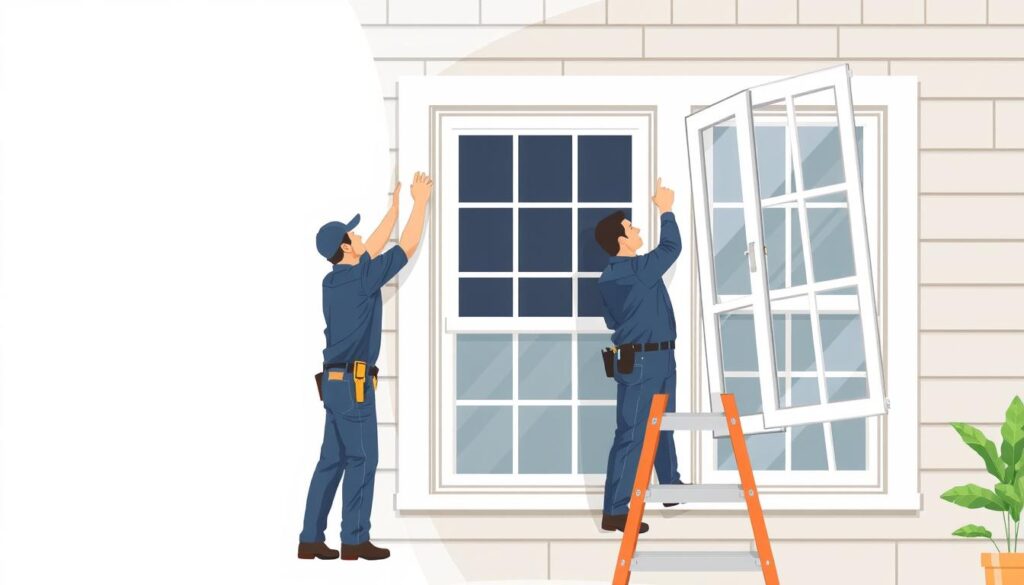
Compare like‑for‑like: scorecard and what to match
We recommend a simple scorecard that weights: materials/spec, glazing, labour scope, making‑good, timeline and warranty. Rank each quote to spot omissions.
| Criteria | Weight | Why it matters |
|---|---|---|
| Materials & spec | 30% | Defines durability and long-term value |
| Glazing | 20% | Comfort and energy savings |
| Labour & making‑good | 25% | Reduces rework and extra costs |
| Timeline & warranty | 25% | Protects your investment after handover |
When energy upgrades pay back and warranty essentials
Energy‑efficient glazing can cut heating/cooling by ~15–25%. Double glazing often repays in 3–5 years in many homes. Choose upgrades that match noise, security and sun exposure needs to get the best investment return.
| Warranty item | What to expect | Note |
|---|---|---|
| Workmanship | 1–5 years | Response times and fixes included |
| Product | Manufacturer cover | Confirm exclusions |
| Handover docs | Record of specs & care | Essential for claims |
“Buy once, install once — a clear scope and solid warranty save you money.”
Casement Window Installation Prices: Conclusion
In closing, practical choices and accurate site detail make the difference between a fair quote and surprise bills. ,
Key takeaway: specifications, access and local demand shape final costs more than a per‑unit number. In Johannesburg and Sandton you should expect higher labour and access fees.
Decide your target spec — material, glazing and finish — then check it against suburb access and complexity. Use the tables and the quote checklist in this guide to compare offers like‑for‑like.
Insist on itemised quotes that show labour scope, making‑good, disposal and warranty. Finally, request multiple like‑for‑like quotes and ask direct questions about glass, frames, sealing and timelines before you commit.
We recommend this straightforward process to protect your budget and ensure long‑term performance across South Africa.
FAQ – Casement Window Installation Prices
What do we mean by “casement” and where do these fittings work best in South African homes?
We mean side‑hinged frames that open outward on a crank or lever. They suit bedrooms, kitchens and living rooms where ventilation and unobstructed sightlines matter. Their seal and draught control make them a good choice for areas exposed to summer winds and winter rains in Johannesburg and surrounding suburbs.
How does opening style — casement vs sliding vs fixed — change cost and value?
Opening style affects material, hardware and labour. Side‑hinged models often need stronger frames and robust hinges, so they typically cost more than fixed panes but offer better ventilation and security. Sliding units can be cheaper to manufacture but may offer less weatherproofing. Fixed glazing is least expensive but adds no ventilation benefit.
What are typical supply‑and‑install ranges per window in Johannesburg?
Prices vary with size, glass and frame material. For a standard aluminium side‑hinged unit we generally see a mid‑range figure per window, with budget aluminium and uPVC at the lower end and bespoke timber at the upper end. The final figure depends on glazing type, finish and any site work.
How much does professional labour usually add per window?
Labour depends on complexity. A straight swap (insert) costs less than a full‑frame replacement. Single‑storey, easy‑access installs are cheaper, while double‑storey or structural alterations increase time and hourly rates. Labour also covers sealing, flashings and making good internally and externally.
When is per square metre pricing used instead of per window pricing?
Per square metre pricing appears on large custom façades, commercial projects or when windows are non‑standard sizes. Per window pricing is common for residential replacements where units are discrete and standard. We recommend per square metre for continuous glazings and conservatory walls.
What should a detailed quote itemise to avoid surprise costs?
A clear quote lists materials, glazing specification (single, double, Low‑E), frame finish, hardware, labour hours, scaffolding or access charges, disposal, guarantees and VAT. It should state lead times, exclusions and any conditional costs for structural work or planning consent.
Why do prices differ between Johannesburg and Sandton?
Metro demand, higher finish expectations and more expensive labour in Sandton often push prices up. Luxury fittings, bespoke powder‑coating and faster lead times also add cost. We see suburbs with higher geared renovations attract premium materials and installers, which reflects in the quote.
How do areas like Roodepoort, Randburg and Midrand affect pricing?
Suburb variation is driven by transport distance from suppliers, local labour rates and site accessibility. Some suburbs have older housing needing extra structural work, while newer developments accept standard units, which keeps costs lower. We account for travel time and logistics in our estimates.
How do transport, access and site conditions change the final cost?
Narrow streets, restricted parking or long carry distances increase labour and time. Second‑storey installs need scaffolding or cherry‑pickers. If we must protect landscaping or remove existing frames carefully, these add to the total. We include these factors in our site assessment.
How do material choices — aluminium, timber, uPVC — affect upfront cost and long‑term value?
Aluminium generally offers durability, low maintenance and modern finishes at a mid to high price point. Timber commands a premium for insulation and aesthetics but needs ongoing maintenance. uPVC is budget‑friendly and energy‑efficient but can limit colour and slim profiles. Lifespan, maintenance and thermal performance influence lifetime value.
What are common benchmarks for aluminium units in South Africa?
Aluminium benchmarks reflect powder‑coated finishes, serviceability and the grade of thermal breaks. Standard aluminium with basic glazing sits in the mid‑range, while thermally broken frames with double glazing and premium hardware sit at the top. We always compare thermal performance alongside price.
How do glass choices change cost — thickness, safety glass, double glazing and Low‑E?
Thicker panes and laminated or toughened safety glass cost more. Double glazing increases material and labour but greatly improves insulation and reduces noise. Low‑E coatings add further cost but yield long‑term running‑cost savings. We recommend matching glass spec to the room’s orientation and noise exposure.
What impact do frame finishes and colour options have on price?
Standard anodised or off‑the‑shelf powder coats are more economical. Custom colours, dual‑colour finishes and special textures attract a premium and longer lead times. Powder‑coating quality and warranty lengths also affect value, so choose reputable finish suppliers.
How much does complexity — insert replacement vs full‑frame replacement — affect the quote?
Insert (sash only) replacements are quicker, cheaper and less invasive. Full‑frame replacements require removing existing frames, possible structural repairs and re‑plastering, which increases labour and materials. We assess on site and advise the most cost‑effective and durable solution.
What optional project costs should we expect — measurement, permits, disposal and making‑good?
Measurement and templating, planning approvals where required, disposal of old frames, scaffold hire and making‑good (plastering, painting) are common extras. We list these separately so homeowners can see which are optional and which are necessary for compliance and finish quality.
How should we set a realistic budget per window or for a full‑home project?
Start with a per‑window mid‑range figure based on your preferred material and glazing, then add allowances for labour, access and finishes. For whole‑home upgrades, include contingency for unforeseen repairs. We can provide a staged estimate after an on‑site inspection.
How do we compare like‑for‑like quotes from different suppliers?
Compare material specs, glass type, frame sections, hardware brands (for example Roto or Siegenia), labour inclusions, finish warranties and lead times. Ask for a breakdown and insist on warranties for both materials and workmanship.
When do energy‑efficient upgrades pay back for homeowners?
Double glazing and Low‑E coatings deliver savings on heating and cooling over time, reduce noise and improve comfort. Payback depends on usage, orientation and local energy prices, but many homeowners see measurable benefits within several years, especially in more extreme climates.
What should we expect from warranty and after‑sales support?
A good warranty covers frame finish, hardware and glazing seals for a clear period and includes workmanship cover. We recommend suppliers who offer a written warranty, prompt service response and documented care instructions to protect the investment.