
Get Reliable Brick Boundary Wall Construction Cost Estimates Fast in Johannesburg, Roodepoort, Sandton, Randburg, Eastrand, Midrand, Centurion & Pretoria
With brick boundary wall construction cost being a key factor, how much should a property owner in Johannesburg really budget for a secure perimeter?
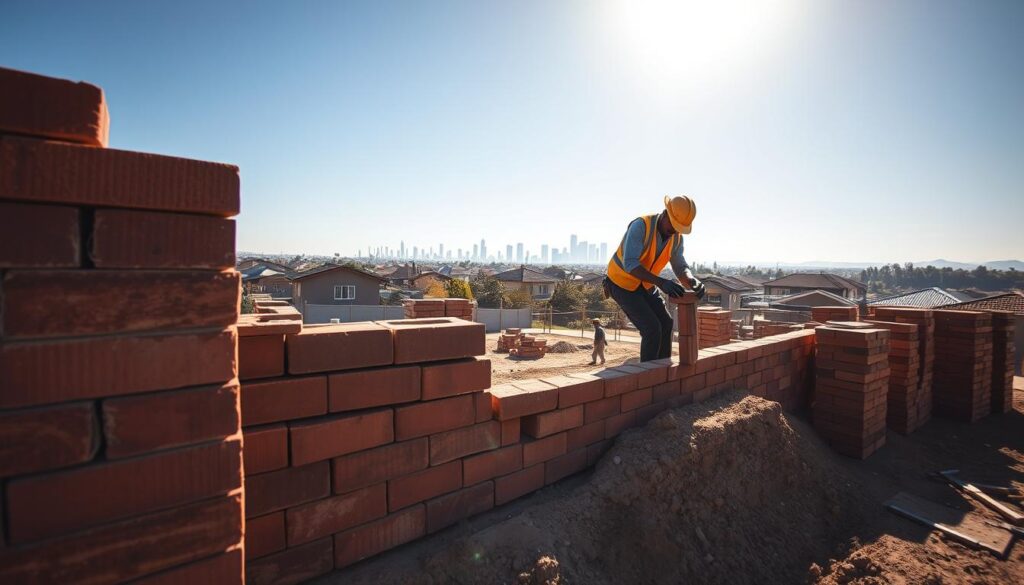
We write this as a practical buyer’s guide for owners who need a realistic, local view rather than vague national averages. We focus on what a typical boundary wall includes — foundations, capping and finishes — and what is usually excluded unless stated, such as gates or CCTV conduits.
Market rates in South Africa vary, so we explain how material choice, height and site conditions change the final figure. We also set out two measurement methods: per linear metre for runs, and per square metre for brickwork and finishing comparisons.
Expect clear ranges and the reasons behind them, plus tools you can use: tables, checklists and scenario breakdowns to reduce surprises and keep builds safe and compliant – Contact Us
What drives boundary wall construction pricing across Johannesburg and Gauteng right now – Brick Boundary Wall Construction Cost
We set out how local security needs, rising inputs and site logistics combine to shape realistic pricing across Gauteng.
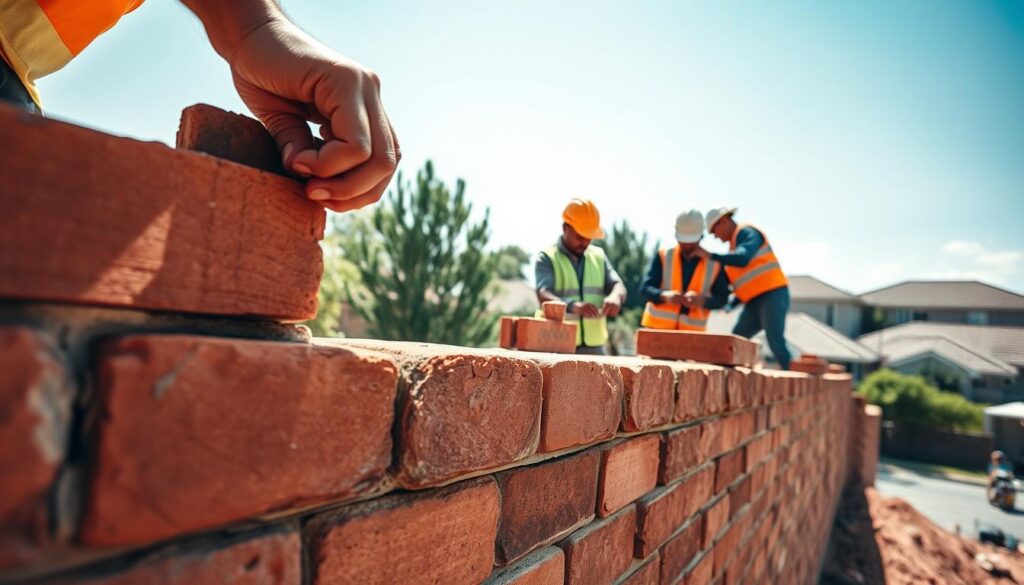
Security requirements shaping specs
Security trends now demand taller perimeter builds and anti-climb measures. This raises the need for deeper footings and extra reinforcement, which directly affects wall construction and boundary wall installation pricing.
Common add-ons include electric-fence brackets, razor spikes, specialised capping and gate-motor provisions. Each add-on can force design changes and add to labour and material costs.
Construction cost pressure
We track inflation at about 5.7% rising to ~5.9%. Rising cement, steel, fuel and energy push contractors to shorten quote validity and add contingencies.
Load-shedding and higher energy bills add roughly 15% pressure to pricing. Labour typically represents 25–30% of total spend, so labour costs shifts matter.
Why location changes the quote
Pricing varies widely across Gauteng. In johannesburg sandton, premium labour rates, strict estate rules and tougher access often lift final figures.
- Across Gauteng, expect up to ~25% variation due to travel, supplier distance and local rules.
- Sanity-check any wall installation cost: ask if excavation, rubble removal, curing, capping and finishes are included.
We will add practical tables next: a security add-ons budgeting grid and a “Quote must state” checklist to help you compare offers fast.
Brick Boundary Wall Construction Cost in Johannesburg: realistic ranges and how we calculate them
We give practical ranges and a clear step‑by‑step method so you can compare quotes fairly.
How we calculate: multiply run length by height to get area, choose wall type and thickness, add foundation, reinforcement, finishes and site allowances. This gives a transparent cost breakdown that contractors should list.

Per linear metre vs per square metre
Use per linear metre for long, even runs at a single height. Use per square metre for variable heights, heavy plaster or decorative finishes. Per square pricing is more honest when lots of finishing labour applies.
Typical ranges by height
| Height (m) | Indicative price (per linear metre) | Notes |
|---|---|---|
| 1.8 | R1,800–R2,500 | Common for suburban homes |
| 2.1 | R2,200–R3,000 | Often needs deeper footing |
| 2.4 | R2,600–R3,500 | Taller, more reinforcement |
| 3.0 | R3,200–R4,500 | Engineering may be required |
Brickwork, plastering and finishing ranges (per square metre)
| Item | Range (R/m²) | Comment |
|---|---|---|
| Brickwork | R500–R800 | Includes mortar and labour |
| Plastering | R80–R150 | Two coats, ready for paint |
| Paint / sealer | R40–R120 | Depends on quality and coats |
| Capping / coping | R120–R300 | Stone or precast options |
Sample cost breakdown for a 25 m run
| Line item | Unit | Approx. total |
|---|---|---|
| Excavation & footing | l.m | R6,000–R9,000 |
| Brickwork (25 m × 2.1 m) | m² | R26,250–R39,900 |
| Plaster & paint | m² | R6,300–R9,750 |
| Capping & cleanup | l.m | R3,000–R7,500 |
Face brick gives a higher upfront price but reduces repainting. Plastered finishes are cheaper upfront and more flexible but need regular maintenance.
Tip: always get quotes that state height, finish and foundation assumptions in writing. Premiums apply for corners, piers and hard access sites.
Material choices that shift your wall construction cost the most – Brick Boundary Wall Construction Cost
What we pick for finishes and panels changes both the immediate price and the long-term value. Material drives speed, security and upkeep. We compare three popular families so you can match a budget to your risk profile and neighbourhood expectations.
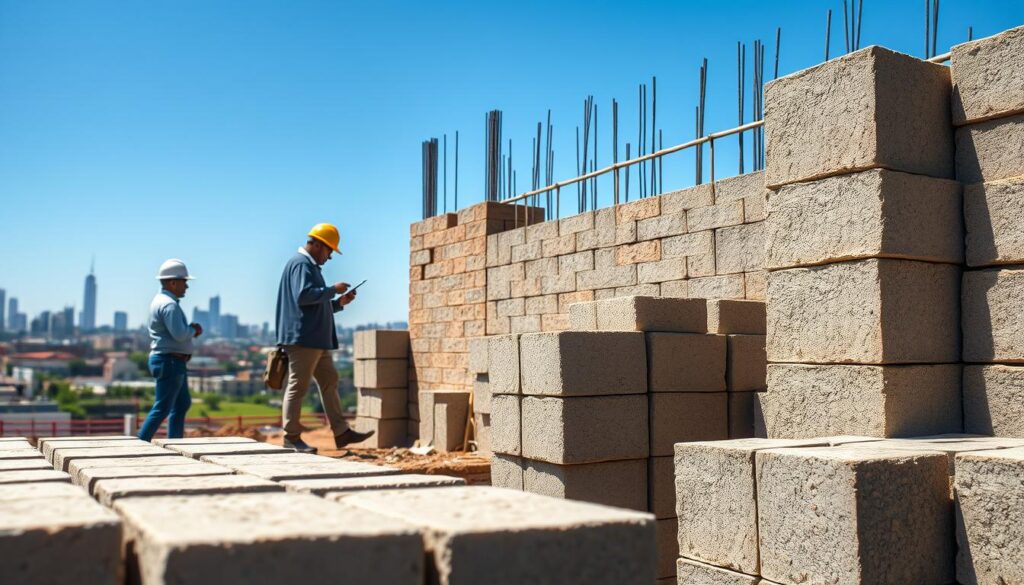
Brick walls: durability, aesthetics, maintenance expectations
Face brick delivers strong kerb appeal and low routine maintenance. It resists weathering and needs less repainting than plastered finishes.
Plastered systems are cheaper upfront but require periodic repainting and crack repairs. Expect higher upkeep over a decade.
Precast concrete panels: Vibracrete and “Stop Nonsense” ranges
Precast concrete fits long runs where speed matters. Typical ranges: Vibracrete ≈ R700–R1,200 per metre; “Stop Nonsense” ≈ R900–R1,500 per metre. Panels lower labour and shorten the installation schedule.
Trade-offs: panels can be less flexible visually and need panel replacement if struck or damaged.
Concrete block options and hybrids
Concrete blocks sit between face brick and precast on price and finish flexibility. They are often ~15–25% cheaper than premium face brick when finished carefully.
Hybrid builds — brick pillars with precast infill — give visual appeal at key points while keeping the project a true cost-effective boundary solution.
| Material | Best for | Weak spots | Typical lifespan / maintenance |
|---|---|---|---|
| Face brick | Kerb appeal, low upkeep | Higher upfront price | 30+ years / minimal repainting |
| Precast concrete | Long runs, fast installation | Panel damage, limited finishes | 20–30 years / panel repairs |
| Concrete block | Flexible finishes, mid price | Needs good workmanship | 25+ years / periodic plaster repair |
“Pick the material that suits your security needs and resale goals, not just the lowest per metre price.”
Siteworks and foundations: the hidden boundary wall cost that makes or breaks budgets – Brick Boundary Wall Construction Cost
A clear site survey saves time and money. Hidden ground issues, poor drainage or fills change the plan and the final price. We urge an early assessment so a realistic cost breakdown follows the quote.
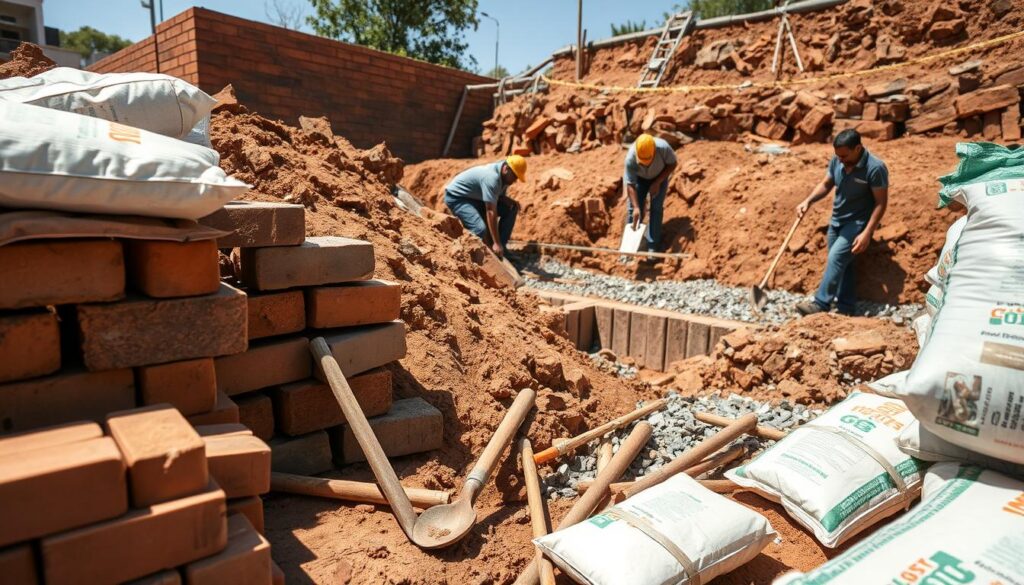
Ground conditions and drainage
Clay soils commonly need deeper footings and extra reinforcement. Sandy ground is easier, but filled or wet sites often require drainage provision and stronger footings. We check pooling history and visible soil to judge risk.
Site preparation allowances
A proper quote should list clearing, demolitions, rubble removal and safe access. Transport costs and disposal fees are often missed and then billed later. Ask for these items to be itemised to avoid surprises.
Slopes and retaining sections
Per linear metre pricing breaks down on slopes. Steps, retaining sections and extra concrete raise installation cost even when run length stays the same. Account for engineering and extra labour in sloping areas.
| Impact band | Foundations | Site prep |
|---|---|---|
| Low | Shallow strip footing | Clear vegetation, minor levelling |
| Medium | Deeper footing, basic reinforcement | Demolition, rubble removal |
| High | Engineered piles, drainage works | Retaining, long haulage, heavy machinery |
| Constraint | Typical impact | Notes |
| Narrow access | +10–20% | Hand-carting materials raises labour |
| No on-site parking | +5–15% | Longer delivery windows and higher transport costs |
| Restricted hours | +5–12% | Shorter working days extend schedule |
Questions to ask: “What foundation depth is assumed?”, “Is drainage included?”, “Is rubble removal itemised?”, “How are slopes measured and priced?”
We recommend a site assessment early so your boundary wall project estimate reflects reality, not best-case hopes.
Labour costs, timeframes and logistics that affect wall installation cost – Brick Boundary Wall Construction Cost
When planning a perimeter project we must factor labour, programme and logistics from day one.
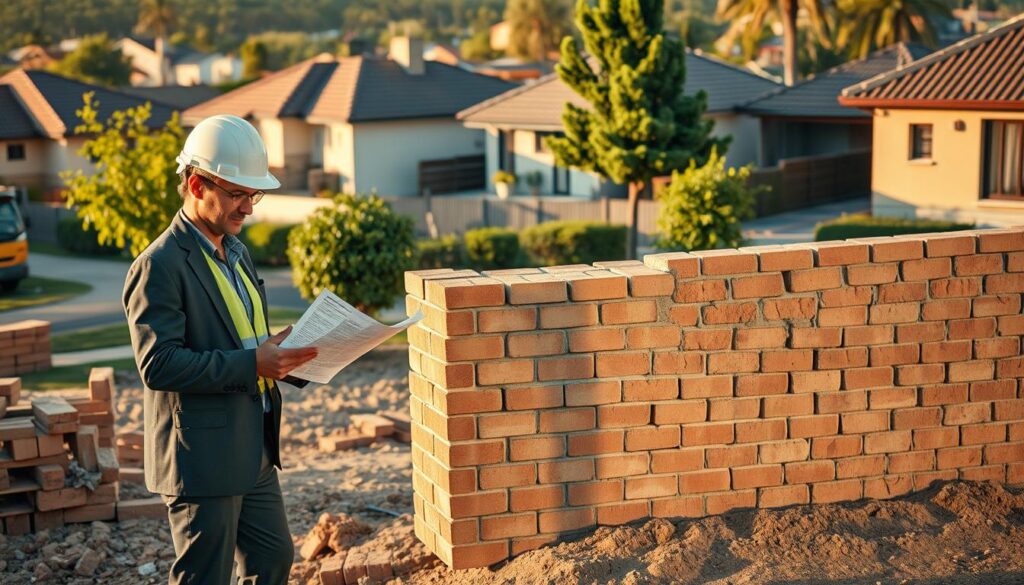
How labour shows up in quotes: team size, skill mix (skilled masons vs general hands), supervision and the number of site days. Labour makes up roughly 25–30% of total spend so it matters.
Productivity: bricklaying vs precast speed
Precast installation can achieve about 30–50 m/day while bricklaying is nearer 5–10 m/day. Faster assembly reduces days on site and lowers sundry expenses, even if daily crew rates are higher.
| Run length | Precast (days) | Bricklaying (days) |
|---|---|---|
| 20 m | 1 | 2–4 |
| 50 m | 1–2 | 6–10 |
| 100 m | 2–4 | 12–20 |
Load‑shedding and energy pressure
Planned outages affect mixing, cutting and security lighting. In practice this can add roughly 15% to project prices through overtime, generator hire and delays.
Transport and supplier availability across Gauteng
Local supplier lead times, delivery batch sizes and transport costs change schedules across suburbs. Remote deliveries or limited access increase daily crew idle time and travel allowances.
“Check start dates, delivery windows and a materials staging plan before you sign.”
| Logistics checklist | Why it matters |
|---|---|
| Delivery access width | Avoids hand‑carting and extra labour |
| Offloading area | Speeds deliveries and protects materials |
| Storage protection | Prevents weather damage and theft |
Payment staging reduces risk: pay on measurable milestones — foundations complete, run to height, finishes done. This aligns incentives and helps cashflow.
Johannesburg suburb-by-suburb pricing: what to expect in Sandton, Randburg, Roodepoort, Midrand and beyond – Brick Boundary Wall Construction Cost
We compare typical uplifts across neighbourhoods so you know when a higher quote is justified.
Sandton and northern suburbs
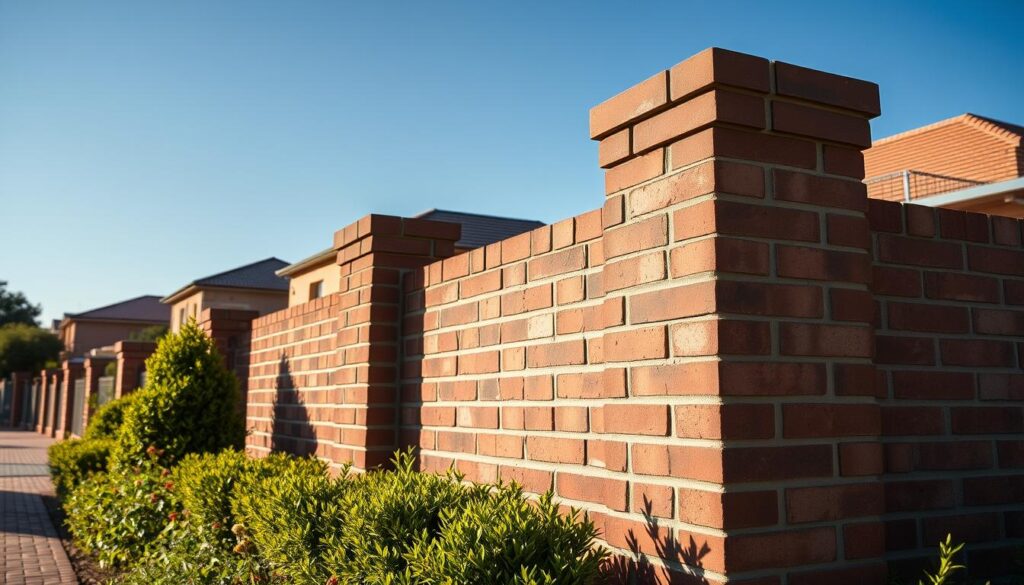
Sandton and nearby northern suburbs attract a premium of roughly 15–25%. Estates demand higher finishes and stricter site controls. We often see premium materials and tighter logistics listed on quotes.
Central Johannesburg vs West Rand
Central areas can be complex because access, parking and demolition vary block by block. West Rand tends to be cheaper where contractor supply is strong and access is easier.
Eastrand, Midrand, Pretoria and Centurion
Midrand and the Eastrand usually sit mid-range when access is straightforward. Pretoria and Centurion often benchmark lower — commonly 5–10% below Johannesburg averages — but always check supplier availability.
| Region | Uplift vs baseline | Common drivers |
|---|---|---|
| Sandton / Northern | +15–25% | Premium materials, estate rules, security |
| Central Johannesburg | +5–15% | Access limits, parking, demolition |
| West Rand | -5–0% | Contractor availability, easier logistics |
| Pretoria / Centurion | -5–10% | Supplier distances, regional labour rates |
| Shortcut | 30 m example | 80 m example |
| Per linear metre range | R2,000–R3,000 | R2,000–R3,000 |
| Add-ons (fencing, lighting) | R6,000–R12,000 | R12,000–R28,000 |
| Siteworks contingency (10–15%) | R6,000–R13,500 | R16,000–R36,000 |
Ask suppliers to itemise any location uplift so the premium is transparent and defensible.
Brick Boundary Wall Construction Cost: Conclusion
We finish with a concise, practical checklist so your decisions stay specification-led, not price-led.
Choose material, confirm height and compliance (street ≈ 1.8 m, side ≈ 2.1 m), assess siteworks and foundations, then compare per linear metre and per square metre lines.
Account for add-ons—electric fencing typically starts at R250–R450 per metre—and factor regional uplift of ~10–25% for premium suburbs and tight access.
Protect your budget: insist on an itemised price breakdown, check what the installation cost includes, and keep a contingency for foundations and access realities.
Before you sign, confirm compliance, foundations, reinforcement, finishes, rubble removal, timeline and payment milestones. We invite you to request a tailored quote based on your suburb, run length and security goals—spending right on foundations and premium materials usually saves more later.
FAQ – Brick Boundary Wall Construction Cost
What factors determine the price of a brick boundary wall project in Johannesburg and nearby suburbs?
We look at site access, ground conditions, desired height and finish, material choice (face brick, plastered units or precast panels), foundation depth, add-ons such as palisade tops or sensors, and local labour and transport charges. Regulations and permit requirements in specific suburbs also affect the final quote.
How do we calculate price per linear metre versus per square metre?
Per linear metre works best for continuous runs with uniform height—useful for budgeting fences along property lines. Per square metre suits variable heights or detailed finishes because it captures surface area for plastering or cladding. We convert between the two by multiplying linear length by wall height to get square metres, then apply the relevant unit rates.
What realistic price ranges should property owners expect for common residential heights across Gauteng?
For standard single-storey heights, we provide tiered ranges that reflect material and finish: economical block with plaster, mid-range face brick, and premium face brick with capping. Regional labour rates and access can shift those bands, so we always present a low/medium/high estimate and an itemised breakdown.
How does choosing face brick compare with a plastered finish in terms of long‑term value?
Face units cost more upfront but reduce maintenance and offer better resale appeal. Plastered finishes are cheaper initially but require periodic repainting and repairs. We advise weighing initial spend against lifecycle maintenance and neighbourhood expectations, especially in areas like Sandton and parts of Midrand.
When are precast concrete panels (Vibracrete) a better option than solid units?
Precast panels speed installation and lower labour time, which can reduce overall spend on sites with good access. They often suit long, straight runs or gated complexes. We consider panel costs, transport, crane requirements and aesthetic preferences when recommending precast versus masonry solutions.
What extra sitework charges should we budget for that often get missed?
Clearing vegetation, demolishing existing structures, rock or clay excavation, drainage provision and retaining support on slopes add material and labour. Restricted access that needs specialised plant, and rubble removal, also increases costs. We include contingency allowances for unforeseen ground conditions.
How do ground conditions change foundation requirements and pricing?
Poor soils, high water tables or sloping sites require deeper strip footings, reinforced concrete or piled solutions, which raise excavation and material costs. Good, level ground keeps foundation spend modest. We recommend a quick site appraisal before firm pricing to avoid surprises.
How do labour rates and local logistics affect installation timelines and total price?
Faster methods like precast reduce on‑site labour hours; traditional masonry takes longer and needs skilled bricklayers. Load shedding interruptions, fuel prices and supplier stock can delay works and increase labour standby charges. We schedule with local suppliers to minimise disruption and cost escalation.
Does pricing vary significantly between Johannesburg suburbs such as Sandton, Randburg and Roodepoort?
Yes. Premium suburbs typically attract higher labour and specification expectations, pushing prices up. Outlying areas may have lower contractor density, increasing transport fees. We provide suburb‑specific estimates and note typical uplifts for Sandton, northern suburbs and the West Rand.
What is included in our standard quotation to ensure transparency?
Our quotes list material quantities and grades, labour hours, foundation and sitework allowances, transport and plant hire, finishes (capping, paint, render), and contingency. We separate unit rates per metre or square metre so clients see how each element drives the total.
Can we mix materials—such as pillars with precast infill—to lower the overall price?
Absolutely. Hybrid designs using masonry pillars with precast panels or block infill cut material and labour costs while keeping strength and a high‑quality appearance. We model several options to show cost, speed and maintenance trade‑offs.
How do we handle permits and compliance across different municipalities in Gauteng?
We advise on local municipal requirements, submit drawings where necessary, and include permit fees in our detailed estimate when requested. Compliance with boundary set‑backs, maximum heights and engineering specs is part of our service to avoid later penalties or rework.
What maintenance should owners plan for after installation to protect their investment?
Routine checks for mortar cracks, repointing where necessary, paint touch‑ups for rendered finishes, and clearing drainage channels prevent deterioration. We offer maintenance schedules and cost estimates so owners can budget for long‑term value rather than short‑term savings.
How do we factor transport and supplier availability into our pricing for suburban and regional jobs?
We assess supplier proximity, access routes and vehicle sizes needed. Remote deliveries, oversized panels or multiple trips add to transport fees. We lock material prices with suppliers and schedule deliveries to reduce storage time and handling charges.
Do we provide itemised comparisons to help decide between premium and cost‑effective options?
Yes. We prepare side‑by‑side comparisons showing initial installation spend, expected maintenance, lifespan and resale impact. That lets clients choose a solution that matches budget, security needs and long‑term value.